
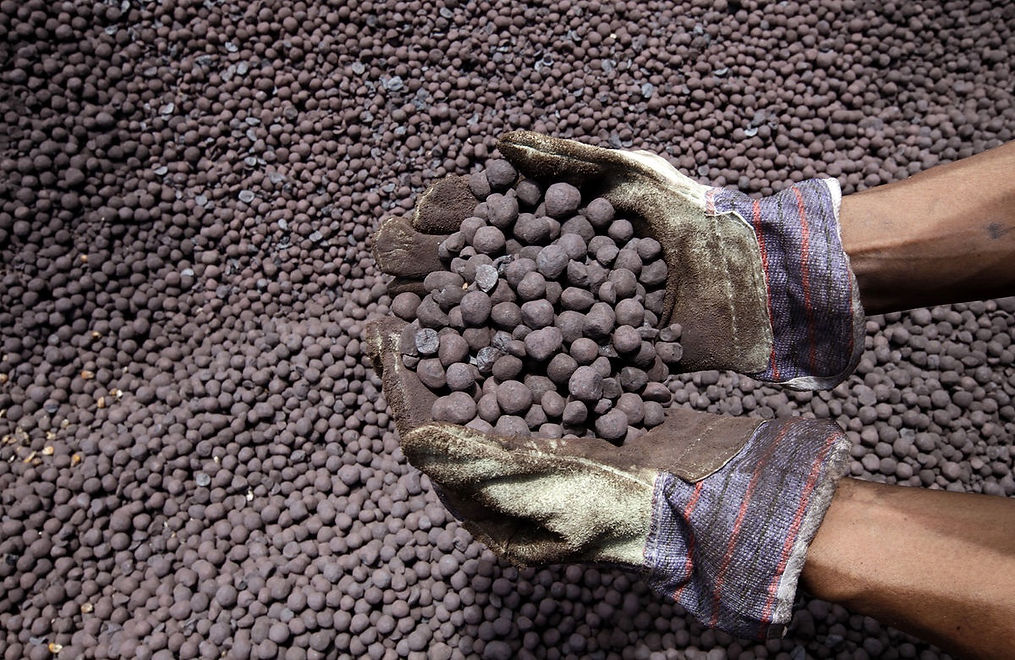
Iron Ore Pellets (DR Grade)
Product Specifications
1
Chemical Properties (Typical Range)
-
Fe (Total): 65% – 67%
-
FeO: 0.9% – 1.2%
-
SiO₂: 2.5% – 3.5%
-
Al₂O₃: 0.4% – 0.8%
-
CaO: 0.6% – 1.0%
-
MgO: 0.3% – 0.5%
-
P: ≤ 0.03%
-
S: ≤ 0.01%
2
Physical Properties
-
Size: 9–16 mm (min 90%)
-
Cold Compression Strength: 220–260 kg/pellet
-
Bulk Density: 2.1 – 2.35 t/m³
-
Porosity: 22% – 26%
-
Low Moisture suitable for bulk handling
3
Metallurgical Behavior
-
High reducibility
-
Low swelling index
-
Excellent strength during handling and reduction
-
Designed for DR furnaces and EAF steelmaking routes
Request a Quote
Looking to secure a reliable supply for your production needs?
Share your product requirements, specifications, preferred delivery terms, and destination port, and our team will prepare a tailored commercial offer. Universal Way ensures transparent pricing, consistent quality, and smooth coordination from order to delivery.
Get in touch with us today and enter the details of your inquiry — we will respond promptly with the best available options.

The Role of DR-Grade Iron Ore Pellets in Modern Steelmaking
The steel industry is changing faster than ever, and The Role of DR-Grade Iron Ore Pellets in Modern Steelmaking has become a major part of that transformation. As countries invest in cleaner technologies and as industries search for more sustainable production methods, DR-grade pellets play a huge part in meeting these goals. These pellets aren’t just another material—they are the foundation of efficient, high-quality, and low-emission steel production.
Today’s steelmakers face rising demand, pressure to cut emissions, and a need for steady raw material quality. DR-grade pellets help solve all three challenges. Because they are made with high iron content and low impurities, they deliver consistent results across different steelmaking methods, especially in direct reduction (DR) processes.
Let’s break down what makes these pellets so important in the modern steel landscape.
What Makes DR-Grade Pellets Unique?
DR-grade pellets stand out because of their excellent purity and structure. They contain more than 67% iron and have very low levels of silica, alumina, and sulfur. This balance makes them perfect for direct reduction, where iron ore is converted into metallic iron without using a blast furnace.
These pellets are also more uniform in size, which improves the flow of gases during reduction. This helps increase efficiency and reduce energy use—two key factors in modern steelmaking.
Importance of Iron Ore Quality in Steelmaking
Quality matters in steelmaking because impurities can weaken steel and slow down production. DR-grade pellets provide a dependable input that reduces waste, increases furnace output, and improves the final steel’s strength and purity. Steelmakers prefer DR-grade pellets because they offer predictable and repeatable results.
Understanding Direct Reduction (DR) Technology
Direct reduction technology is central to the global shift toward cleaner steelmaking. Instead of using coke like traditional blast furnaces, the DR process uses natural gas or hydrogen to remove oxygen from iron ore.
Overview of the DR Process
In the DR process, pellets pass through a shaft furnace where they are heated and exposed to reducing gases. These gases strip away oxygen, turning the ore into direct reduced iron (DRI). The DRI can later be melted in an electric arc furnace to produce steel.
Key Advantages of Using DR Technology
-
Lower greenhouse gas emissions
-
Reduced energy consumption
-
Higher-quality steel
-
Use of cleaner fuels like hydrogen
-
Flexibility for recycling scrap alongside DRI
These benefits explain why DR technology is becoming the backbone of modern steelmaking.
Chemical & Physical Properties of DR-Grade Pellets
DR-grade pellets are engineered with strict physical and chemical properties to meet the demanding requirements of direct reduction. Their composition affects furnace performance, energy usage, and the quality of direct reduced iron (DRI). Because the DR process depends on gas-based reduction, any inconsistency in pellet quality can disrupt the efficiency of gas flow and heat distribution.
These pellets typically contain 67% or more total iron (Fe) and have controlled levels of silica (SiO₂), alumina (Al₂O₃), sulfur (S), and phosphorus (P). Their high compressive strength and uniform size ensure that pellets endure transportation, heating, and mechanical stress without breaking.
Required Iron Content and Purity Levels
High iron content is the heart of DR-grade pellets. A higher Fe level means faster reduction and lower energy consumption. DR plants rely on predictable, stable pellets because these influence metallization rates. Lower impurities also reduce slag formation in the electric arc furnace (EAF), helping steelmakers save on flux materials and electricity.
Low Impurity Specifications (Silica, Alumina, Sulfur)
Impurities create operational inefficiencies and increase costs. That’s why DR-grade pellets must contain:
-
Less than 2% silica
-
Less than 1.5% alumina
-
Extremely low sulfur and phosphorus
Silica and alumina reduce furnace productivity, while sulfur weakens steel quality. These strict thresholds make DR-grade pellets ideal for high-quality steel applications like automotive, construction, and machinery manufacturing.
Why DR-Grade Pellets Are Vital for Modern Steelmaking
The steel sector is under pressure to produce more steel while emitting fewer pollutants. DR-grade pellets offer the perfect combination of efficiency, quality, and environmental benefits.
Enhancing Furnace Efficiency
DR-grade pellets allow for smoother gas flow and quicker reduction times. Their shape and density support high permeability in shaft furnaces, making them energy-efficient. With better reducibility, companies can achieve higher output with the same equipment.
Improving Steel Quality
Since these pellets contain fewer impurities, the resulting DRI is cleaner. Clean iron means fewer processing steps, better control of chemical composition, and improved final steel strength. Manufacturers of specialty steel rely heavily on DR-grade pellets to ensure consistent performance.
Supporting Low-Carbon Steel Production
One of the biggest benefits is how DR-grade pellets contribute to greener steel. Their compatibility with hydrogen-based reduction—where hydrogen replaces natural gas—helps eliminate CO₂ emissions entirely from the reduction process.
The Role of DR-Grade Pellets in Green Steel Initiatives
As the world pushes toward decarbonization, green steel has become a hot topic. DR-grade pellets are key to making this transition successful.
Hydrogen-Based Direct Reduction
Hydrogen-based DR is emerging as one of the most promising pathways for carbon-neutral steel production. Because DR-grade pellets already work well in gas-based systems, they can easily adapt to hydrogen reduction without major process changes. This makes them ideal for future-ready steel plants.
Reducing Carbon Emissions in the Steel Industry
Traditional blast furnaces produce large amounts of CO₂ due to coke combustion. DR plants, however, dramatically reduce emissions. When using hydrogen instead of natural gas, emissions drop to nearly zero. DR-grade pellets enhance this process by allowing faster, more efficient metallization at lower temperatures.
DR-Grade Pellets vs. Blast Furnace Pellets: Key Differences
Not all pellets are made the same. DR-grade and blast furnace (BF) pellets serve different purposes and have distinct qualities.
Chemical Composition Comparison
PropertyDR-Grade PelletsBF Pellets
Fe Content67%+62–65%
SiO₂Very LowHigher
Al₂O₃Very LowHigher
SulfurExtremely LowModerate
Intended UseDR Shaft FurnacesBlast Furnaces
Performance in Reduction Processes
DR-grade pellets are designed to handle gas-based reduction, which requires consistent porosity and compressive strength. BF pellets, on the other hand, need to endure high-temperature reactions and coke-based reduction. Using BF pellets in a DR plant would reduce efficiency and increase operational problems.
Global Market Dynamics and Supply Chain Challenges
The demand for DR-grade pellets is skyrocketing as more countries adopt DR and EAF-based steelmaking. However, supply is limited.
Regions Leading Production of DR-Grade Pellets
Main producers include:
-
Brazil
-
Sweden
-
Canada
-
Middle East countries
-
Russia (limited due to geopolitical challenges)
These regions typically possess high-quality magnetite and hematite ore suitable for pelletizing.
Supply Limitations and Demand Outlook
As green steel becomes more common, analysts predict that demand for DR-grade pellets will outpace supply. Mining companies must invest in beneficiation and pelletizing plants to keep up. Transport costs and geopolitical disruptions also influence availability.
Industrial Applications and Use Cases
DR-grade pellets serve many industrial roles.
Electric Arc Furnace (EAF) Steelmaking
EAFs rely heavily on DRI and scrap. But inconsistencies in scrap quality make DRI essential, especially for producing high-grade steel. DR-grade pellets improve melt rates, reduce energy use, and provide greater control over chemistry.
DRI and HBI Production Applications
Pellets are used to produce:
-
DRI (Direct Reduced Iron)
-
HBI (Hot Briquetted Iron)
HBI is ideal for long-distance shipping. DR-grade pellets enable higher metallization levels, making them perfect for export markets and global EAF operations.
Latest Technological Innovations in Pelletizing
Technology is advancing rapidly in pellet production.
Advanced Beneficiation Techniques
Modern beneficiation removes impurities from low-grade ores, allowing producers to reach DR-quality specifications. Magnetic separation, flotation, and grinding technologies have improved significantly.
Enhanced Pellet Strength & Reduction Efficiency
Pelletizing plants now use:
-
New binders
-
Optimized firing curves
-
High-temperature induration
These innovations strengthen pellets and improve reducibility.
Economic Benefits of Using DR-Grade Pellets
Switching to DR-grade pellets isn’t just good for the environment—it also helps steelmakers cut costs.
Cost Savings in EAF Operations
Cleaner feedstock reduces:
-
Electric energy consumption
-
Electrode wear
-
Slag treatment costs
-
Furnace downtime
These savings add up across thousands of tons.
Long-Term Profitability in Green Steel Production
Companies producing green steel command premium prices. DR-grade pellets are a key input in this growing market, making them valuable for long-term profitability.
FAQs About DR-Grade Iron Ore Pellets
1. What are DR-grade pellets used for?
They are used mainly in direct reduction processes to produce DRI or HBI, which are later melted in EAFs to make high-quality steel.
2. How do DR-grade pellets differ from regular pellets?
They have higher iron content, lower impurities, and optimized physical properties suitable for gas-based reduction.
3. Why are DR-grade pellets important for green steel?
Their compatibility with hydrogen reduction makes them essential for low-carbon and carbon-neutral steelmaking.
4. Which countries produce DR-grade pellets?
Brazil, Sweden, Canada, and some Middle Eastern countries lead global production.
5. Are DR-grade pellets more expensive?
Yes, they cost more due to beneficiation requirements, but the efficiency gains outweigh the costs.
6. Can DR-grade pellets be used in blast furnaces?
They can, but it’s inefficient and uneconomical. They’re designed specifically for DR furnaces.
Conclusion
The Role of DR-Grade Iron Ore Pellets in Modern Steelmaking continues to expand as industries push for cleaner, more efficient production. With their high iron content, low impurities, and compatibility with hydrogen-based reduction, these pellets are the backbone of the steel industry’s green transformation. As demand rises, their impact will only grow—not just in steel quality but also in helping the world shift to low-emission industrial practices.